

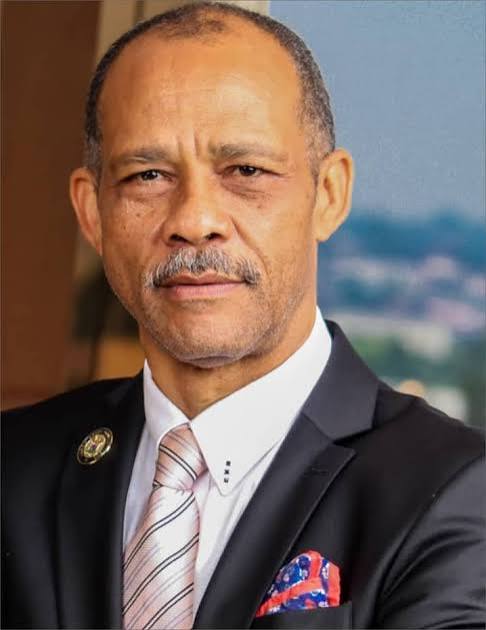
By Alex Ekemenah
Lagos State Commissioner for Health, Professor Emmanuel Akinola Abayomi, has called for a holistic approach to health and treatment of diseases for Africans, Nigerians, and Lagosians in particular.
He made this call at the maiden Annual Conference held by the Faculty of Life Sciences, University of Lagos, Yaba, recently.
In his welcome address, the Dean of Faculty of Life Sciences, University of Lagos, Professor Ganiyu Oyetibo disclosed that the mission of the Faculty is “to provide transformative education, forster groundbreaking research and apply biological knowledge responsibly to address global challenges in health, biodiversity and sustainability.
“At the Faculty of Life Sciences, we aren’t just studying life – guided by our values of integrity, inclusivity, innovation, and services, we strive to cultivate a vibrant academic community where curiosity and collaboration thrive.”
In his keynote address, the Lagos State Commissioner for Health, Professor Akinola Emmanuel Abayomi, highlighted the broad threat spectrum to health in Lagos State and the challenges faced by the State in providing all-inclusive health care for all using a novel One Health approach.
Tracing the genesis of some of the grave threats to health safety, Professor Abayomi attention to some statements made by Bill Gates in 2017.
The first of such statements is: “The next epidemic could originate using genetic engineering to create a synthetic version of small pox virus or a super contagious and deadly strain of flu. We ignore the link between health security and international security at our peril.
The second is: “Epidemiologists say a fast-moving airborne pathogen could kill more than 30 million people in less than a year. And they say there is a reasonable probability the world will experience such an outbreak in the next 10 years.
Also in 2017, the Center for Health Security published a warning: “A biological event of severe magnitude caused by a zoonostic transmission or laboratory engineered pathogen could lead to sudden, extraordinary widespread disaster beyond the capacity of the world to control causing great suffering, death and global insecurity and conflict. This is the term referred to as Global Catastrophic Biological Risks (GCBRs).
COVID-19 was an example of such a global pandemic already predicted in 2017.
Professor Abayomi highlighted the new threat called Agent “X,” which requires a big thinking approach.
“The World Health Organisation wants you to worry about Agent “X. ” Agent X is a placeholder for disaster we can’t imagine yet.
“Will Agent X come from animals? Will Agent X come from people? Will Agent X come from Biosecurity Research Lab? Will it be a weapon? How do we prepare for Disease X?”
Abayomi said, “Every serious health threat facing Lagos in the next twenty years will arrive through the boundary between people, animals, and the environment that have increased their global mobility.”
Noting that “We did not defeat Ebola in a treatment ward. We defeated it in the space between sectors. We did the same with COVID. Now, we are in the middle of another risk from the outbreak in DRC. Lagos is preparing again.”
But what does implementation of One Health actually mean?
According to the Commissioner, the challenges faced by Lagos State are in four categories.
“Spilliovers (markets, abattoirs, poultry, and rodents.
“Resistance (one resistance across people, birds, and fishes)
“Food and Water (informal chains, drainage, and flood)
“Climate (Heat, flooding, air, and vectors)
He noted that, for instance, climate is not the backdrop but a major driver.
“Lagos is facing a huge risk in which 30 million could be in danger in the context of Lagos serving as Nigeria’s gateway for incoming travellers from all over the world.
“Of all travellers entering Nigeria pass through Lagos at 70% of international arrivals with 7 million airport passengers passing through Murtala Muhammed International Airport annually.
“Also, with 24 million population serving as the highest density in Nigeria. Apapa Seaport is Nigeria’s largest maritime entry point for cargo and passengers and thousands of people daily crossing through land borders from neighbouring states and countries.
Abayomi further disclosed that “over 1,800 truckload of livestock enter Lagos each month with daily consumption of 3,000-5,000 heads of cattle with an annual estimate of 1.8 million heads of cattle.”
Another critical challenge facing Lagos State, according to Abayomi, is the shortage of medical manpower.
“Currently, Lagos has 7,000 medical personnel whereas it needs 40,000 personnel to be able to cope effectively with the volume of patient case load.”
“Pathogens currently or imminently in danger of causing public health crises in Africa include Lassa fever, Ebola, Dengue, Yellow fever, pandemic flu, MDR pathogens, monkey pox, genetically manipulated pathogen, unknown pathogen Agent X.
‘Lassa’s case fatality rate is a clinical number but its transmission curve is an ecological one”.
Abayomi further disclosed that “most fevers are not malaria. Malaria positivity in Lagos public health facilities, before and after systematic rapid diagnostic testing reveals 60% before testing but only 5% confirmed after testing. Thus, the question is: if it is not malaria, then what is it?
“Most malaria in Lagos are now Malaria-Negative Fevers (MNF) standing at 95% while Malaria-Positive-Fevers stands at 5%, thus necessitating that am MNF patient will need to be seen by a doctor in a primary healthcare centre or hospital immediately.”
Professor Abayomi said the issue of having adequate medical manpower especially for Lagos State, is a very critical one and urgent too.
“Nigeria currently has 40,000 doctors at a ratio of 1 doctor to 5,000 population where the WHO’s standard stipulate meeting SDGs is a doctor-patient-ratio of 1 to 600 patients.
“Lagos alone requires 40, 000 doctors, but it currently has only 7,000 doctors. It needs more 33,000 doctors.”
He further disclosed that Lagos State has developed a blueprint for a Lagos Bioshield and Genomic Defence.
“Lagos State has developed a very robust Biosecurity Framework. Experience during COVID demonstrates that more infrastructure and human capital are required to absorb sudden catastrophic pandemic shocks.
“Biosecurity is not just about the next doomsday pandemic or which terrorist organisation is going to unleash biological mayhem on humanity.
“Integrated biosecurity and One Health is a way of life.
“An emerging concept that Lagos wants to promote across agencies responsible for Health, Environment and Sanitation, Agriculture and Urban City Planning is clearly depicted in our Themes+Agenda.
“We must, therefore, make drastic changes to the wat we live on earth: Go Green; Cut down carbon emission; Reverse deforestation; Adopt Biosecurity Laws; Develop biosecurity frameworks; and Erect barriers to zoomosis.”
Professor Abayomi added that the responsibility of government includes:
- Each country has the moral responsibility to protect its people within the social contract from biological crises and threats and protect the integrity of its ecosystem we depend on.
- Government agencies must be able to do the following: (1) pre-empt and prevent biosecurity threats (2) predict (3) mitigate and adapt to insidious unavoidable environmental changes (4) find and clearly identify a threat when it emerges (5) stop it promptly (6) restore calm and civil disruption and build resilience (7) requires operational systems, policies and regulations and legislations to deter threats and enable a rapid scale up should an emergency occurs despite preventative measures (8) trained workforce, role of tertiary academic institutions, labs, environmental and public health monitoring and surveillance systems, and emergency response inclusive of law enforcement.
Quoting David Suzuki, Professor Abayomi enjoined all to cooperate with the Lagos State Government in actually the aims of One Health for All to enable the citizens live a healthy life and contribute meaningfully to socioeconomic development of the State and Nigeria as a whole.
“There are some things in the world we can’t change – gravity, entropy, the speed of light, and our biological nature that requires clean air, clean water, clean soil, clean energy and biodiversity for our health and wellbeing. Protecting the biosphere should be our highest priority, or else we sicken and die. Other things like capitalism, free enterprise, the economy, currency, and the market are not forces of nature, we invented them. They are not immutable, and we can change them. It makes no sense to elevate economics above the biosphere. ”

