

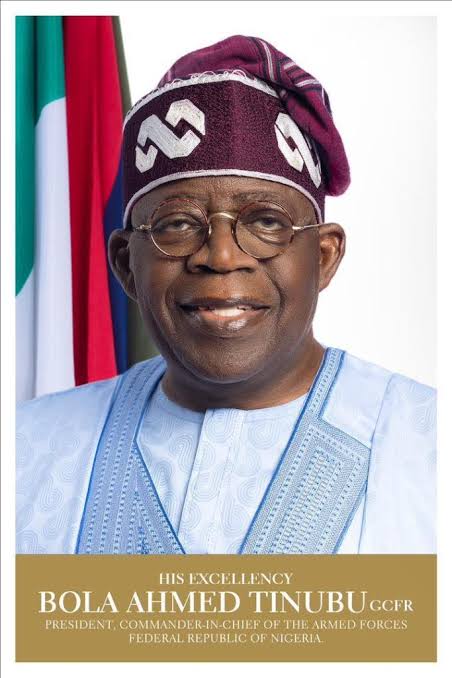
The economy under President Tinubu is the focus of discussions as the country goes into a crucial election next year
By Haniel Ukpaukure
President Bola Tinubu’s economic reforms are hung majorly on two pegs, namely, removal of fuel subsidy and harmonization of the foreign exchange rates. More than three years down the road, and with about four months before a crucial election that would determine his continued residency in Abuja or return to Lagos, it’s a mixed bag of successes, delayed successes and failures.
One of the issues that is going to dominate electioneering for the 2027 election from now till January 16 – if not the most important issue – is the economy.
A major success of the removal of fuel subsidy has been the phenomenal increase in government revenue and a drastic reduction in deficit spending. More money has become available to governments at sub-national and local government levels, though there are many cases of local government councils still tied to the financial apron strings of state governments because of refusal by governors to abide by the Supreme Court ruling on financial autonomy for the third tier of government.
State governments now have more money at their disposal to pay workers’ salaries as, and when due, including meeting of pension obligations to retirees. In fact, some states have enough money to pay minimum wage that is higher than the N70, 000 national minimum wage law which came into force in 2024. But for some reasons that include “lack of sufficient funds” and failure to reach agreement on negotiations, eight states – Bornu, Gombe, Kaduna, Zamfara, Yobe, Taraba, Benue and Kogi states – have yet to pay the amount, after two years.
The success of the removal of fuel subsidy is also evident in increase in spending on infrastructure across the states. State governors now have enough money to execute critical infrastructure projects, especially roads and bridges, where they are necessary. There is also a noticeable increase in funding for education and healthcare in the states.
The stabilization of the exchange rate has brought into existence a market driven exchange rate that is free of artificial distortions. The noticeable improvement in macro-economic indices has boosted investor confidence in Nigeria, as reflected in the increase in portfolio investments in the country’s stock market. Investors from outside Nigeria are beginning to look in the country’s direction for foreign direct investment.
John Famodimu, Chairman and Chief Executive Officer of Rulers’ World Master Communications International, a United States-based organisation with interests in import, export, property development and media, said there is a growing interest in Nigeria’s economy. He spoke when the Oyo State Council of the Nigerian Union of Journalists paid him a courtesy call in Ibadan, recently.
“While coming to Nigeria, I noticed the business class section of the flight I boarded was dominated by foreigners, particularly Westerners,” he said. “To me, this is a signal that people outside Nigeria are paying attention to developments in the country and are looking at the Nigerian business environment.”
The second edition of the Asiwaju Scorecard Series/Asiwaju Policy Roundtable organized by the All Progressives Congress (APC) Professional Forum on Tuesday, September 1, 2026, presented the government of President Bola Tinubu an opportunity to tell Nigerians the impact of its economic policies on Nigerians. Speaking through Professor Nentawe Yilwatda, National Chairman of APC who represented him, Tinubu said current economic indicators were suggestive of the fact that the economic reforms are beginning to lay the foundation that would enable the country to achieve its target of a $1 trillion economy by 2030.
Some of the indicators are the external reserve of $54.08 billion as at September 3, 2026, according to the latest figure released by the Central Bank of Nigeria; consolidated non-oil revenue of N16.4 trillion in the first quarter of 2026, against N13.63 trillion in 2023, which translated into a GDP growth of 4.43 per cent in the first quarter of the year. There is also an improvement in the country’s trade position, from merchandise trade surplus of about N44.8 billion in 2023 to about N7.54 trillion in the first quarter of this year.
“These figures do not mean that our economic challenges have disappeared, but they demonstrate that the direction of travel has changed,” Tinubu said. “The ultimate test is when stability translates into cheaper food, more jobs, affordable credit, reliable electricity and greater purchasing power of Nigerians.”
Tinubu’s acknowledgement of the fact that evidence of the success of his economic reforms can only be reflected in the standard of living of Nigerians is, unarguably, the most important aspect of the discourse on the outcome of the reforms. This explains why the people and the government are not on the same page on how the reforms have played out, three years down the road. While the president says the country has turned the corner, or, as he is wont to say, the country has exited the dark tunnel, Nigerians – those at the receiving end of the reforms – appear unanimous in their position that there is no noticeable sign of light at the end of the tunnel.
Tinubu’s historic declaration at his inauguration, on May 29, 2023, that, “fuel subsidy is gone,” caused an unprecedented chain of reactions within hours of his making it. Barely had the president left the inauguration ground when Nigerians discovered to their shock that the costs of food items and transportation had suddenly gone out of their reach. Tinubu would spend the next few weeks of trying to settle into office and understanding his new environment fighting a fire he had inadvertently set, when he hadn’t put in place mechanisms to manage it. Nigerians who barely survived eight years of hardship under Muhammadu Buhari suddenly realised they had, in fact, left the frying pan to get right into the fire.
It has been three years of battling the high cost of living in every nook and cranny of the country. As if the exorbitant costs of food items, healthcare and transportation were not enough, Nigerians have had to endure the twin problem of lack of electricity and high tariff for the few hours it is available. This is against the background of the statement the president made while campaigning in 2022, to the effect that Nigerians should not re-elect him if he did not provide adequate electricity by the end of his first term.
The increase in workers’ salaries, which was supposed to cushion the effect of petroleum subsidy removal, hasn’t had the desired effect due to high inflation rate that has severely eroded purchasing power all over the country. The high interest rate, which currently stands at 26.5 per cent, limits access to borrowing, with adverse effects on production. The limited access to finance has dealt a severe blow to small businesses, many of which are struggling to survive. Experts say worry that small and medium enterprises face the risk of going out of existence in an economic environment that is anything but friendly.
The challenge of insecurity appears intractable. The problem, which was confined to the North East during the tenure of Goodluck Jonathan, has spread to the North West, North Central and South West, with the added dimension of kidnapping that has become a huge industry involving terrorists and some elements in local communities. The situation is such that kidnapping and release (or rescue) of victims has become a routine, no longer evoking surprise from Nigerians.
The government’s inability to solve the security problem has impacted negatively on agriculture because farmers can no longer go to their farms, for fear of either being killed or kidnapped for ransome. This has expectedly contributed to food scarcity and high cost of food items. The cost of food items in the market today may not be as high as what obtained in the wake of removal of fuel subsidy in May, 2023. But it is still not within the reach of a greater number of Nigerians, majority of whom cannot afford one good meal a day.
The World Bank puts Nigeria’s current poverty rate at 63 per cent, or about 140 million people in a population estimated at about 230 million. The bank attributes this to the high inflation rate which has eroded purchasing power in the country.
Against the background of government’s celebration of seemingly encouraging macro- economic indices, the reality on the ground is that the standard of living in the country is still abysmally low. This forms the crux of discussions on the performance of the Tinubu administration as the country heads into an election that is going to be quite consequential. Among other considerations, the government’s performance is going to be measured against the country’s current productive capacity, compared to what it was in 2023.
At the 1st International Conference on Entrepreneurial and Managerial Innovation for Sustainable Socio-Economic Development (ICEMISD 2026) which was hosted recently by Bingham University, Karu, Abuja, economic experts listed lack of access to finance and security as some of the factors that put over 40 million small business at the risk of going under.
Dr. Esther Williams, Managing Director of Debo Group who spoke at the event, advised the government to put in place reforms that would make loan conditions favourable to small business owners, like alternative funding channels which may include crowd funding, angel investors and forming of partnerships. Dr. Edinen Usoro, Managing Director of Executive Guards Limited who spoke on insecurity, particularly terrorism, kidnapping and cybercrime, said these factors increase the cost of doing business and discourage investors. “Security is not just a condition for peace, it is a fundamental determinant of business success,” Usoro said.
Ibanga Bassey, an economist and Managing Consultant, Precision Consult, says as the country heads into the 2027 general election, two issues – insecurity and the economy – are going to dominate discussions, and may determine the choice voters would make. He acknowledges, however, that a higher percentage of the Nigerian electorate is not educated and well informed enough to vote on issues, but on sentiments that are related to ethnicity and religion. He said in a society where issues determine the choice voters make in an election, Tinubu’s re-election would be a hard sale to Nigerians, going by the prevailing economic situation in the country.
“President Bola Tinubu would not be re-elected simply on the basis of impressive macro-economic figures which the government flaunts in the faces of Nigerians,” Bassey said. “The market woman does not understand what you mean by GDP growth. The commuter who cannot afford the high cost of transportation to his place of work is not concerned about macro-economic data. What Nigerians want to see is improvement in their standard of living, in terms of not just the quality, but also the number of times they are able to put on their table.”
He said the primary objective of any economic reform is improvement in the quality of lives of the people. “When this is not achieved, then the most attractive macro-economic figures mean nothing,” he said.
Bassey criticized the recent announcement by Tinubu, after a meeting with governors elected on the platform of APC, of a plan to roll out of 500 additional stations for Compressed Natural Gas (CNG) buses, effective from October 1, 2026, which is aimed at reducing transport fares across the states. He wondered why the government waited until the commencement of electioneering for the 2027 election to implement a programme that targets reduction of the high cost of transport fares Nigerians have been struggling to cope with for more than three years.
He recalled that provision of CNG-powered buses was one of the promises Tinubu made after the removal of fuel subsidies in 2023 when the country was plunged into an economic crisis that included astronomically high transport fares. He said the government did not implement the programme with the seriousness it deserves, only to suddenly show interest because election is around the corner.
“That’s why I said the Nigerian electorate is not sophisticated enough to vote on issues, but sentiments,” he said. “Otherwise, the electorate would be discerning enough to know the difference between genuine commitment and politics.”
The economic reforms of the Tinubu administration appear to have recorded minimal success, judging from the impact it has had on Nigerians in the last three years. It remains to be seen whether not this would be reflected in the manner they will vote in the forthcoming general election.

