

Stakeholders in Nigeria’s food and health sectors have intensified efforts to promote fortified rice as a public health intervention against micronutrient deficiencies.
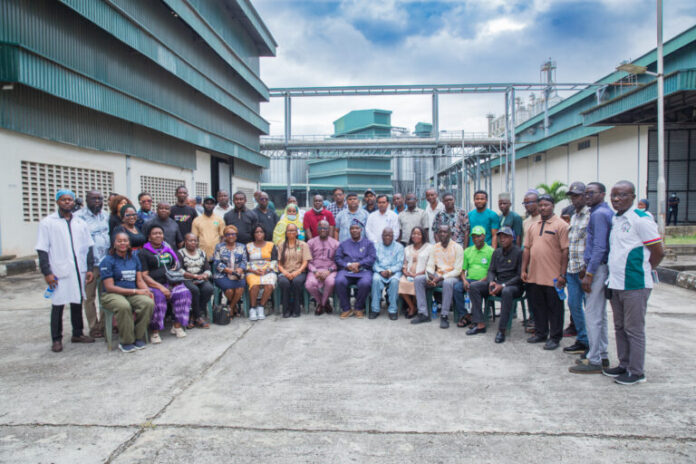
The Lagos State Ministry of Agriculture and Food Systems organised a training for rice millers on Thursday at Imota, Lagos.
The Special Adviser to the Governor, Babajide Sanwo-Olu, on Agriculture and Food Systems, Mr Oluwarotimi Fashola, said rice bio-fortification involved adding essential vitamins and minerals to locally processed rice.
Fashola said the intervention was aimed at improving the nutritional value of rice and reaching a large segment of the Nigerian population.
He said nutrient additives used in fortified rice included folic acid, iron and vitamins such as B12, which were important for growth and brain development.
He said rice fortification was particularly important because rice was a major staple in Nigerian diets.
Fashola noted that the intervention was still at an early stage, with only a limited number of rice mills currently having the capacity to produce fortified rice.
He added that increased public awareness and encouragement were needed to drive consumption of fortified rice as it was gradually introduced into the Nigerian food market.
The stakeholders clarified that rice fortification should not be confused with bio-fortification, noting that the two interventions operated at different stages of food production.
They explained that bio-fortification began at the seed and farm levels, while large-scale food fortification involved adding micronutrients during or after food processing.
They said food fortification could accommodate multiple micronutrients in a single food product, making it useful for addressing deficiencies that could coexist within a population.
The rice fortification programme was aimed at restoring nutrients lost during processing and adding essential micronutrients approved to help address deficiencies such as anaemia.
The Deputy Director and Head of Food and Agriculture Group at the Standards Development Department of the Standards Organisation of Nigeria, Mrs Nneno Obiangwa, said stakeholders had developed a code of practice.
Obiangwa said the code provided procedures producers must follow to ensure that required nutrients were properly incorporated while maintaining product quality.
According to her, stakeholders had also developed standards for Fortified Rice Kernels, which are nutrient-rich kernels blended with milled rice to produce fortified rice.
“The standard guides producers to ensure consistency, so that what is produced in one factory meets the same requirements as what is produced elsewhere,” Obiangwa said.
She said the standards development process involved the Ministries of Agriculture and Health, regulators, rice millers, academia, industry players and other relevant stakeholders.
The stakeholders also disclosed that efforts were underway to reduce dependence on imported fortified rice kernels by developing local production capacity.

