

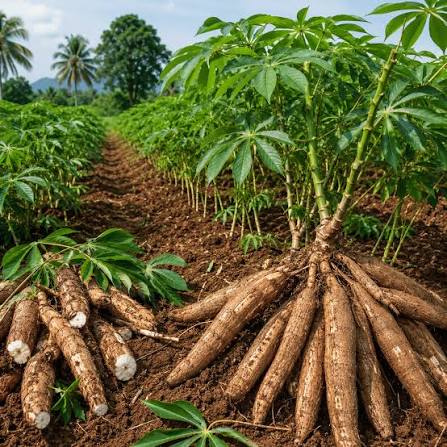
Mr Joshua Apeh, Executive Director, Green Harvest Stuff, has described cassava as the “crude oil” of the people, calling for increased investment in its production, processing and value addition.
Apeh made the call on Saturday in Otukpo during a Farmers Awareness and Mobilisation Programme, where he said Benue was blessed with fertile land capable of producing cassava for both local consumption and international markets.
The executive director said cassava had the potential to transform the fortunes of farmers if properly processed, packaged and marketed.
“Our cassava is our crude oil. Just as crude oil transformed the fortunes of nations, cassava can transform the fortunes of our people,” he said.
He said cassava could also support renewable energy industries, including bioethanol production, and help reduce the country’s dependence on imported fuel.
Apeh urged the government to place greater value on farmers, agricultural land and cassava, noting that increased investment across the value chain could create jobs and empower young people.
The executive director advised farmers and entrepreneurs to produce, process, add value to and industrialise cassava products for local and international markets.
He said Nigeria could achieve food security, strengthen rural economies and reduce dependence on imports by producing what it consumed and exporting surplus cassava products.
Apeh cited Thailand and other leading cassava-producing countries as examples of nations that had benefited from processing and value addition.
“The difference is not simply production. The difference is value addition, and that is the gap Green Harvest has risen to bridge,” he said.
He called on the Federal Government to study the Green Harvest model and consider replicating it across Nigeria’s six geopolitical zones.
According to him, the initiative represents a broader drive towards food security, renewable energy, farmer empowerment, industrialisation, youth employment and economic transformation.
He also urged Idoma people to return to their agricultural roots and harness the economic opportunities presented by cassava production.
“The time has come to turn our cassava into wealth. The time has come for Green Harvest, our farmers and our people,” he said.

