

| “Héritage en Lumière” concludes with Fashion Talk, a landmark economic panel after five days of runway shows, a three-day Fashion Village, more than 170 international guests, nationwide broadcast coverage, and a clear message to the global fashion industry: Congolese fashion has arrived |
| Kolwezi Fashion Week (KZIFW) concluded its second edition, Héritage en Lumière, on July 5 with Fashion Talk, a closing panel dedicated to the role of fashion as an engine for economic development. The discussion brought together designers, entrepreneurs, policymakers and business leaders to examine the measurable impact of fashion on local economies, marking a fitting conclusion to one of the most ambitious cultural productions ever staged in the Democratic Republic of the Congo.
From the opening runway on July 1 to the closing conversation on July 5, KZIFW transformed Kolwezi—a city long recognized for the extraordinary wealth beneath its soil—into a stage for the creativity flourishing above it. Over five days, internationally acclaimed designers, emerging Congolese talent, buyers, journalists, cultural leaders and visitors gathered to witness a new chapter in African fashion. Last edition, Kolwezi Fashion Week introduced itself to the world. This edition, just seven months later, it established itself as one of the continent’s most ambitious fashion platforms. A Celebration of African Excellence The opening night was deliberately entrusted to Congolese designers Pero LM Africa, David Insilo, Kitendi Couture, and Marc Yves Creation, whose collections embodied the resilience, innovation and cultural confidence of a new generation of Congolese fashion. The international programme that followed welcomed some of Africa’s most celebrated names, including Taibo Bacar (Mozambique), Danayi Madondo of Haus of Stone (Zimbabwe), Bouboucar Midaye of Mida Style (Mali), and Eric Raisina (Madagascar), reinforcing Kolwezi Fashion Week’s ambition to become a meeting point for African creativity. Every runway was broadcast nationally through Télé 50, Mikuba TV, and digital livestreaming, while beauty partner MAC Cosmetics led backstage artistry throughout the week, delivering a production standard that placed Kolwezi alongside established fashion capitals. The Fashion Village: Fashion for Everyone From July 3 to 5, the Fashion Village transformed KZIFW into a celebration belonging to the entire city. Conceived as a free family festival alongside the runway programme, it brought together live performances, local designers and artisans, educational talks, design competitions, children’s activities and cultural experiences that connected fashion directly with the community. More than a festival, the Fashion Village became a marketplace for Congolese creativity, providing emerging brands with direct access to consumers while creating new opportunities for collaboration between designers, artisans, media and international buyers. By the Numbers The second edition welcomed more than 1,600 guests, including 170+ international designers, media and buyers; hosted 25 designers—including 20 Congolese and 5 international African designers—and presented 20 collections across five days of programming. The opening runway alone reached an estimated 15,000 live viewers through national television, regional broadcast and digital livestreaming, while the event generated more than 5 million social media views during the week, underscoring Kolwezi Fashion Week’s rapidly growing influence across Africa and beyond. “This second edition proved that world-class fashion can emerge from places the industry has too often overlooked. Kolwezi is becoming a meeting point for pan-African creativity, where designers, artisans and visionaries come together to shape the future of our industry. Our ambition has never been simply to host a fashion week, but to build an institution that creates opportunities, transforms communities and firmly establishes Congolese fashion on the international stage,” said Marie Natacha Masuka, founder of Kolwezi Fashion Week. A Fabric That Tells Kolwezi’s Story One of the defining moments of this edition was the unveiling of an exclusive wax fabric conceived by Kolwezi Fashion Week and developed in partnership with Wax Bazaar, a Congolese textile brand. Inspired by the aerial landscape of Kolwezi’s open-pit mines, the design transforms the city’s mining heritage into a contemporary textile narrative. Its vibrant cobalt blues and pinks evoke the minerals that have positioned the Democratic Republic of the Congo at the centre of the global energy transition, while its malachite greens pay tribute to another of the country’s natural treasures. The fabric continues the story begun with last year’s theme, Extraction of Style, transforming the language of extraction into one of creation. It debuted during the festival’s inclusive closing runway, where legendary Congolese designer Fanny Mandina shared the runway with emerging designers from Kolwezi, including Kashal’Art, illustrating Kolwezi Fashion Week’s commitment to celebrating heritage while investing in the next generation of Congolese talent. Fashion Talk: Building an Industry The second edition concluded not with a party, but with a conversation. Fashion Talk, the official closing panel, brought together organizers, designers and business leaders to examine the measurable economic impact of fashion—from job creation and tourism to manufacturing and long-term industrial development. Its conclusion was unequivocal: fashion is not a luxury; it is an industry. That impact was already visible throughout the week. Kolwezi Fashion Week generated more than 300 direct jobs across production, communications, hospitality, beauty, styling, logistics and technical operations, creating opportunities for hundreds of local models, artisans, photographers, technicians and entrepreneurs. As the platform expands, it is projected to create approximately 100 permanent jobs, laying the foundations for both a professional event industry and a thriving fashion ecosystem in the Democratic Republic of the Congo. But the ambition extends far beyond the five-day event. Through the Marie Natacha Masuka Foundation, in partnership with renowned Congolese designer Papy Kaluw of Urban Zulu, Kolwezi Fashion Week is helping establish a garment manufacturing industry in the Lualaba region. By training young people and women in pattern-making, sewing and garment production, the initiative is developing a skilled workforce, supporting local manufacturing capacity and contributing to the long-term revival of the Democratic Republic of the Congo’s textile industry. Together, these initiatives position fashion not only as a cultural expression, but as a catalyst for industrial development, entrepreneurship and sustainable economic growth. In doing so, Kolwezi Fashion Week continues to reposition Kolwezi and the Lualaba Province as a destination for creativity, culture, innovation and tourism, not only mining. “Kolwezi has always given to the world,” organizers said. “This week, the world came to Kolwezi and left with a new picture of who we are. That is the legacy of this edition, and the foundation of the next.” |
Kolwezi Fashion Week Closes Landmark Second Edition, Declares New Fashion Capital Rising in Africa
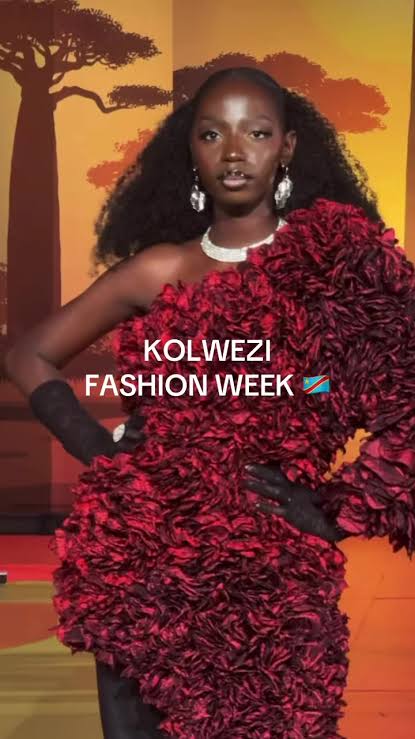
Kolwezi Fashion Week Closes Landmark Second Edition, Declares New Fashion Capital Rising in Africa
Date:


More like thisRelated
U.S Hails Nigeria’s Maritime Security Gains, Predicts Trade Boost
The United States Government has commended Nigeria’s sustained maritime...
First Bank Expo to Strengthen Nigeria’s Agricultural Exports
First Bank of Nigeria Ltd. says its fifth Agric...
INEC Chairman Prof Joash Amupitan to Keynote GOCOP 2026 Conference
Chairman of the Independent National Electoral Commission (INEC), Professor...
Poultry Industry Fastest Pathway to Food Security, Job Creation, Says PAN President
The National Vice President, Poultry Association of Nigeria (PAN),...