

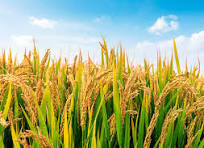
Rice has become a staple food in Nigeria. Every household – rich or poor – consumes a great quantity of rice every day. Of the total projected population figure of about 220million, about 80% feed on rice, hence the huge amount of money spent on importation of rice annually.
From our market survey, a bag of 50kg of rice sells for over N70,000 in the Nigerian market at the moment. The price is very high when we consider that Rice is a staple food in Nigeria.
From our survey, the major cause of the high price of locally processed rice is the cost of paddy, the raw material and other operational activities.
Therefore, there is urgent need to increase the production of paddy in Nigeria.
It is based on the above situation that the Government has entered into agreement with World Bank & AfDB to increase the production of rice in the country. As a result, substantial amount is being worked out by these bodies to commence massive production of rice in the country.
Already, individuals are being encouraged by the Government to enter into Agriculture generally and rice farming in particular to ensure the private sector participated in the venture and to benefit from these incentives from World Bank & AfDB.
In Nigeria today, some states produce paddy rice in abundance due to favourable climatic condition for rice production. Some of these states are Enugu, Ebonyi, Anambra, Abia, Imo, Kwara, Edo, Ogun, Ondo, and some northern states such as Sokoto etc.
Technical Issues relating to the Project
Rice milling project will best be sited in these areas where rice is grown in order to reduce cost of transportation of the paddy.
To set up this project, a large space is required to dry paddy rice after harvesting.
The components of machines required to set up this project are cleaning facilities, Dehuller, Boiling tank, Polisher, Bagger and other miscellaneous equipment such as wheel barrows, weighing scales.
Also, pickup vans and generating sets are essential for smooth running of this project.
These machines can be fabricated locally. They can also be imported from Europe and some known Asian companies that specialize in the area. Prospective investors would be given details on these machine produces and specialists.
Rice milling could be done on cottage, small, medium and large-scale bases depending on availability of capital and the raw materials- paddy rice.
Output could be from 2MT to 150MT per day. Generally, one metric ton of paddy rice yields about 60kg- 70kg of milled rice, depending on milling efficiency company management practice and the variety of rice purchased.
In the process of milling well parboiled rice free from sand, stones, unpleasant odour with less breakages, etc. from purchased paddy, whole rice broken rice and bran are obtained. Whole rice are packed and sold for human consumption. Broken rice is further milled into ‘’Tuwo Shinkafa’’ (a flour meal) while bran is very important input for manufacturing dietary products like rice bran bread which has been acclaimed good for the decrease of blood cholesterol, rice bran oil and livestock feeds. From rice can also be obtained puffed rice, rice cakes, rice pudding etc.
The husks are used for the production of potassium Hydroxide solution or as fuel for milling plants. It can be seen that virtually all parts of paddy rice is useful.
From market analysis, the market for rice is National. With the estimated national population growth rate of 2.9% and population figure estimated at over 220million, Nigeria is a large market and demand is very high while the local supply is very low that rice importation into the country is a very big business. Hoarding, rationing and smuggling and sharp black market practices are associated with the business. This situation should not be allowed to continue forever.
Those importers must channel their huge returns to establishment of rice producing companies in Nigeria instead of encouraging the growth of some foreign countries where rice is imported from.
The huge demand for rice is further accentuated by increasing and expanding urbanization, endless social parties where rice is the main menu, Nigerians eating habits (preference for foreign rice).
Estimated Cost of the Project
The likely cost of total project will not actually be stated safely unless one knows the scope (whether cottage, small, medium or large scale) a proposed investor would like to embark upon, the capacity to produce, the source(s) of the machinery, whether to construct his own building or rent one, the location etc.
Therefore, to embark upon this project, one needs a business plan (feasibility studies), with detailed costing for all the aspects of inputs, and before he can obtain the likely total estimated cost. To do otherwise is to take a leap in the dark or take our characteristics short-cut to distinction that is always ruinous.
Profitability of the Business
In conclusion, rice milling, an agro-based business is profitable (65% on return on investment), and sustainable. It has low capital requirement, technical knowhow is complicated. The machinery and equipment are 100% locally available. The project has a short pay-back period.
It is highly recommended for serious and aggressive promoters, local and state governments and private investors particularly those that are thinking good for this country.
For details on comprehensive and bankable feasibility studies, investment advisory services, funding arrangements, please contact the writer.
Uba Godwin
56, Ishaga Road (1st floor), Surulere, Lagos
Tel; 01-7349363, 08023664368, 08034494437
E-mail; ubagodwin@yahoo.com

