

All over the world, three basic sectors that grow the economy are Agriculture, Manufacturing and Technology. Through Agriculture, food security and employment is assured and raw materials are produced and provided to industries for production; through manufacturing values are added to agricultural produce and also employment opportunities are created and through technology, innovations are made and employment also created.
In the modern world, cottage, small and medium industries in every sector of the economy is very important. It is a better way of creating employment. The Government does not create employment but creates an enabling environment for businesses to thrive.
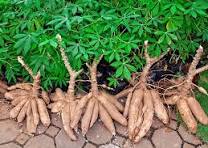
Cassava is a very important agricultural product that is indispensable in the development of the economy of Nigeria. Every hand should be on deck to encourage cassava production either through provision of funds, production for food, raw materials for industries and processing for the export market.
Cassava is an important annual food grown throughout Nigeria. It is tuberous and has the ability to thrive in poor soils and has considerable resistance to drought. It is botanically called manihot-esculenta and also called maniac or tapioca. Cassava is seen as readily available raw materials for establishment of small and medium scale industries in Nigeria. Nigeria’s staple garri is produced from the root of this crop.
Export Types
Cassava for export includes dry cassava leaves, chips, pellets, cassava meal, flour and starch and ethanol. All these products can be exported. Detailed research reports and feasibility studies report on establishment and running of any these aspects of the project are available and would be given to prospective investors.
Uses
Cassava can be used for producing animal feed. The dry roots chips and pellets are usually preferred by industrial animal feeds producers in America and Europe. Alcohol is also extracted from cassava. Textile industries and food industries need starch.
Production
Nigeria is a major producer of this tropical crop with output conservatively put at over 120,000 metric tons as at the end of 2023. However, until 1996, cassava and its allied products were on the export prohibition list. From 1996 the ban was lifted. Therefore, from 2024, anybody can grow, process and export cassava. With this policy action, Nigerian farmers and agro exporters were given the opportunity to develop the local and export markets for this product.
Apart from Nigeria, other major tropical developing countries that produce cassava include Brazil, Thailand, Indonesia and Zaire. Nigeria’s over 70,000 metric tons is almost totally processed and consumed locally.
Export
Globally, only 15 per cent of total production of cassava is exported with Thailand being the major exporter of cassava products. As earlier stated, cassava and its derivatives were de-listed from the export prohibition lists since 1996 and but today any Nigerian can invest and export any processed product(s). Its export is now encouraged among other food crops for which Nigeria is a major producer by the current administration.
Direction of export
The direction of cassava export is mainly Europe and North America with European Union accounting for about 90 per cent of the total buyers. Details of the foreign buyers of industrial starch, cassava chips and pellets and cassava flour would be given to prospective investors on contacting the writer. About 30 per cent of cassava production globally is used for starches and other industrial products and only less than one (1) per cent is processed into ethanol particularly in Brazil. It is a choice animal feed material because of its high carbohydrate content. It is however mixed with protein source such as Soya beans.
Europe Market Overview
Europe is the major importer of cassava for animal production. Details would be given to prospective investors. Animal production being the main attraction of agriculture in Europe, accounted for about 70 per cent of total agricultural output. The compound feed formulation is the main attraction for cassava. About 90 per cent of the traded cassava in Europe is from the developing countries such as Nigeria. Main suppliers are Thailand (about 85 per cent), Indonesia (about six per cent), sub-Saharan Africa is yet to contribute significantly to world trade in cassava with about three (3) per cent recorded in the early part of the millennium.
The principal buyer of cassava in Europe is Netherlands, (accounting for over 40 per cent of total Europe imports); Germany (about 20 per cent), Belgium and Luxembourg (about 13 per cent), France (eight per cent), U.K (10 per cent) and Italy (two per cent). Detailed breakdown would be given to prospective investors the exportable quality standard.
Transportation and handling
Transportation and handling constitute high levels of cost of inputs in preparation of cassava for export. This is due to the bulky nature of the product. This cost could be as high as 50 per cent of total cost.
Proper management of cost reduction programme is therefore recommended for those who wish to venture into the export of cassava as reduction of costs will afford better competitiveness. Cassava pellets are usual cheaper to transport and handle than other exportable processed cassava products like industrial starch. The standard of the product is very important.
Quality Standard
Quality is usually very important in the production for consumption within Nigeria and export. It should be noted that if quality standard is not maintained the export project is bound to collapse. Therefore, it must be worked out carefully.
Chips are normally white or near white, clean, free of mould, foreign matter insect damage and without off odors. Length of chips should be 4-5mm.
Flour Millers are very critical about quality. Consistency of quality is very important for them to maintain the standards of their products.
Quality is usually in terms of nutritive value. Minimum standard specifications are as follows: 70 per cent; 70 per cent and 62 per cent stand for chips, flour and pellets, respectively, while moisture content is 14 per cent, fiber five per cent and ash three per cent content for all the three products. Details would be given to prospective investors on contacting the writer.
Packaging
Packaging is done in sacks of cotton, multi-craft paper bags or clean jute bag; pellets should be uniform in shape and size, less fragile and should be compatible for handling, storage and transportation. Palletizing equipment exists for production of pellets. Prospective investors should not be afraid of the quality control because the writer through years of experience can guide any investor to success.
The current price of Thailand hard pellets (Nigeria’s equivalent) is as high as 3,500 DM per ton, industrial starch $3,800 per ton (please note that the international price fluctuates and project plan market price) would be worked out based on the current.
The processing plants
The plants and machinery for setting up the cassava chips and pellets, industrial starch and flour are locally available. The raw materials, labour and all other required inputs are locally available.
Investment Analysis
| Garri | Chips/ Pellets | Flour | Industrial Starch | |
| Payback period | Within 1 year | Within 1 year | Within 1 year | Within 1 year |
| Return on investment | 52% | 68% | 60% | 60% |
| Net Cash-flows (surplus) 1st year | N368m | N585m | N876m | N1.258B |
| Gross profit1st year | N233m | N348m | N543m | N878m |
| Net profit after tax 1st year | N123m | N226m | N438m | N743m |
There is another advantage that is worth mentioning that prospective investors will derive from investing in this project. The EPZ (export processing zones) can provide accommodation to serious investors. At the same time would ensure quality processing of their export products. Details would be given to prospective investors on contacting the writer.
The writer will guide prospective investors professionally to ensure that all opportunities are tapped (including government’s incentives and funds for agriculture) good packaging, quality products and efficient/effective management is installed for profits. The writer will also assist in the sourcing of the required funds (where necessary) and obtaining NAFDAC approval. For details contact the writer.
Uba Godwin
56, Ishaga Road (1st floor), Surulere, Lagos
Tel: 08034494437 (WhatsApp), 08023664368
Email: ubagodwin@yahoo.com

