

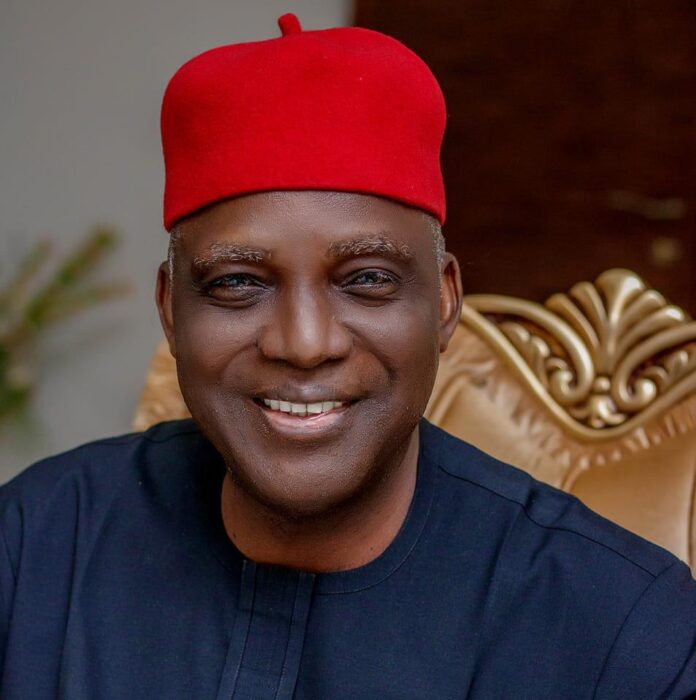
Former Minister of Power, Prof. Bart Nnaji, has identified tariff challenges, irregularities in the privatisation process and investors’ quest for quick returns as major factors responsible for the failure of Nigeria’s power sector privatisation.
Nnaji, Chairman and Chief Executive Officer of Geometric Power, spoke at the third edition of the Lagos Country Club Business Forum on Friday evening in Lagos.
The forum had the them, “Energy Costs and Business Survival”.
He said that one of the major challenges facing Distribution Companies (DisCos) was the failure of government to allow them to operate on cost-reflective tariffs as promised during the 2012/2013 privatisation exercise.
Nnaji said that investors had committed funds to the DisCos based on the understanding that tariffs would reflect the actual cost of electricity supply.
“In preparation for privatisation, I had gone to former President Goodluck Jonathan to tell him that no investor would come to Nigeria unless we had cost-reflective tariffs.
“People may not remember that the tariff before June 2012 was N6 per kilowatt-hour.
“My team and I raised it in one go to N22 per kilowatt-hour,” he said.
He explained that his team engaged traditional rulers, government officials and other stakeholders to prepare the public for the tariff adjustment.
According to him, the government also adopted a strategy to protect low-income earners and rural dwellers, who consumed a relatively small proportion of electricity.
He said that a strong desire for immediate and huge profits contributed to the abuses recorded during the privatisation of the Power Holding Company of Nigeria (PHCN) assets in 2013.
Nnaji described the abuse of the process as a major reason for the poor state of the electricity sector 13 years after privatisation.
He added that the manner in which the exercise was conducted also posed risks to the Nigerian banking system.
“If not for the Federal Government’s intervention through subsidies, the power sector loans, which now amount to more than N7 trillion, according to the Association of Power Generation Companies of Nigeria, the major banks that participated in the privatisation might have gone under,” he said.
Nnaji noted that electricity business required huge capital investment, patience and a long gestation period.
He said that some investments in the sector could take between seven and 10 years to break even and become profitable.
He added that commitment to addressing the country’s electricity deficit should be as important as the profit motive.
At Geometric Power, he said, the priority was to provide reliable electricity to support manufacturing firms, hospitals, laboratories, schools, markets and other businesses.
He said that the company’s investment philosophy aligned with the World Economic Forum’s advocacy for businesses to embrace a stakeholder-oriented approach that considered the interests of society beyond shareholders.
Earlier, Mrs Ifeoma Ukabiala, Senior Energy Executive and Managing Partner of JDR Energy Ltd., said that manufacturers spent about N1.35 trillion on alternative power sources in 2025.
She said that businesses were forced to switch to diesel whenever the national grid failed.
Ukabiala expressed concern that despite Nigeria’s proven gas reserves of about 215 trillion cubic feet as of January 2026, many Nigerians still depended on firewood for cooking.
Also speaking, the immediate past President of the Manufacturers Association of Nigeria, Mr Seyi Adewunmi, described the forum’s theme as timely, saying it addressed a major challenge confronting businesses across the country.
In his welcome address, the President of Lagos Country Club, Adewunmi, said the club, established in 1949, had remained committed to providing a platform for discussions on issues affecting businesses, communities and national development.
He said that the Business Forum was part of the club’s commitment to promoting meaningful conversations beyond recreation and social interaction.
Adewunmi noted that grid failures, rising fuel prices and increasing operational costs had brought the Nigerian economy to a critical crossroads.

