

Ray Echebiri (Bangkok, Thailand)
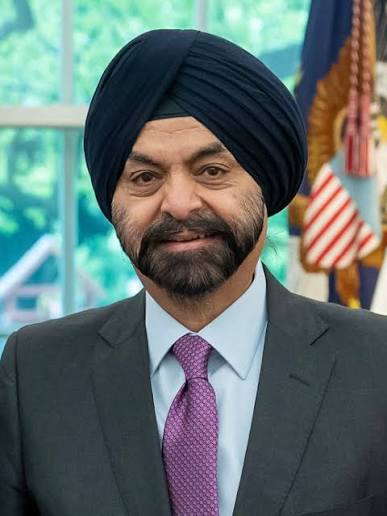
World Bank Group President, Ajay Banga, on Friday urged governments, development institutions and investors to rethink the global development model, warning that a rapidly growing jobs deficit could become one of the defining challenges of the coming decades.
Addressing finance ministers and world leaders at the plenary session of the 2026 World Bank/IMF Annual Meetings in Bangkok, Banga said the world faces a stark employment challenge as demographic growth outpaces job creation.
“Over the next 10 to 15 years, 1.2 billion young people will arrive at a job market projected to offer only about 400 million jobs,” Banga said.
The projection points to a potential shortfall of roughly 800 million jobs, a gap Banga described not merely as an economic statistic but as a threat to opportunity, stability and human dignity.
“A job is not a statistic. A job is dignity,” he said. “It is the difference between a young person who can build a future and a young person awaiting one.”
Mounting pressures
Banga said the World Bank Group’s efforts to expand development financing and stimulate employment are taking place against a backdrop of persistent global challenges, including conflicts, rising debt burdens, constrained government finances and elevated costs for essential goods such as energy and fertiliser.
“The wind has not eased,” he said, reflecting on conditions since the launch of the institution’s reform agenda three years ago.
According to Banga, addressing resource constraints and accelerating job creation must remain the central focus of development policy.
Blending public and private finance
At the heart of the World Bank’s strategy is a model that combines public finance, private investment, philanthropy and technology, with the mix evolving as countries develop.
Banga argued that public and concessional financing must continue to support countries facing the greatest risks, while stronger economies should increasingly attract private investment and gain greater access to capital markets.
“Success arrives when we are no longer needed,” he said, describing a development pathway in which countries eventually graduate from dependence on multilateral support.
Private capital mobilisation surges
Highlighting progress made under the bank’s reform programme, Banga said private capital mobilisation has grown significantly.
The World Bank Group mobilised approximately $35 billion in private capital in fiscal year 2022, before the current workplan began. By last year, that figure had risen to $112 billion, more than tripling over the period.
Combined with the institution’s own lending and financing activities, total financing exceeded $230 billion, he said.
The gains were spread across regions and income groups, with private capital mobilisation nearly tripling in lower-middle-income countries, quadrupling in upper-middle-income countries and more than doubling across Africa.
Creating a new asset class
Banga also outlined efforts by six multilateral development banks to develop common standards for assessing, packaging and transferring investments.
The initiative is designed to allow projects initially financed by development institutions to be sold to other investors later, freeing up capital for new investments.
If successfully scaled, Banga said, the approach could help create a distinct emerging-market development asset class capable of attracting larger pools of private capital.
“If we get this right, the size of our balance sheet no longer defines the scale of our ambition,” he said.
Development as a shared investment
Banga stressed that the consequences of failing to create sufficient employment opportunities would extend beyond national borders, potentially affecting migration, social stability and economic growth worldwide.
Conversely, expanding opportunity could generate benefits far beyond individual countries.
“That is why development is an investment in our collective future,” he said.
Concluding his address, Banga called for a development model suited to the next generation rather than a continuation of past approaches.
“Public money where markets can’t yet reach. Private capital where it can create jobs and scale. Philanthropy to take early risk and unlock new ideas. Technology to make every dollar go further,” he said.
“The jobs gap is a projection. It does not have to be our future.”

