

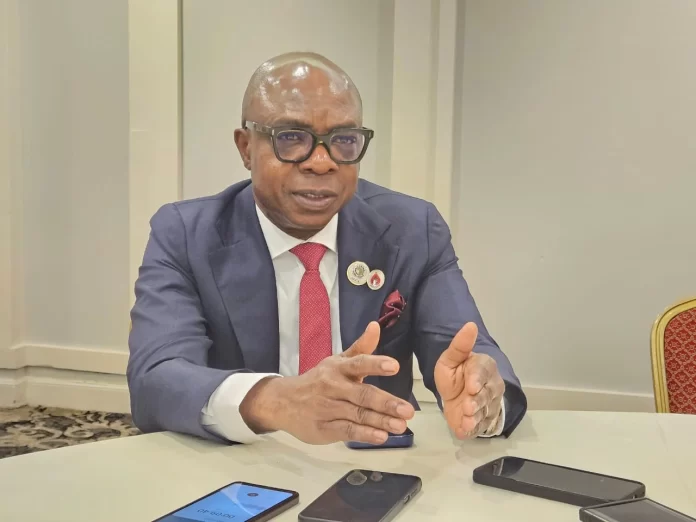
Chairman, Petroleum Technology Association of Nigeria (PETAN), Mr Wole Ogunsanya, has urged African countries to strengthen local capacity and harness natural resources to secure their energy future amid global shifts.
Ogunsanya said this in an interview with newsmen on the sidelines of the Offshore Technology Conference (OTC) 2026 in Houston, Texas, U.S.
Speaking on the conference theme, “Africa’s Energy Transformation: Scaling Investments, Technology and Local Capacity for Sustainable Growth”, Ogunsanya said Africa must take urgent steps to secure its energy future.
“The world is changing rapidly. Countries are becoming more regional in their economic and energy priorities. Energy security is now a major global concern,” he said.
Ogunsanya pointed to major investments in shale gas in the U.S., Europe’s renewable energy push and China’s dominance in electric vehicle and battery technology as indicators of the changing global energy landscape.
According to him, Africa must leverage its abundant oil and gas resources to drive industrialisation, economic growth and energy independence.
“Africa cannot afford to be left behind.
“We may not yet dominate battery technology, but we have enormous oil and gas resources that the world still needs,” he said.
Ogunsanya said Africa holds more than 120 billion barrels of oil reserves and vast gas deposits, while Nigeria alone has over 200 trillion cubic feet of gas reserves.
“The resources are there. The challenge is how Africa can harness them for development,” he said.
He linked low energy consumption across Africa to poverty, weak industrial growth and lower life expectancy.
“People with access to energy preserve food better, process agricultural products, store medicine properly and ultimately live longer,” he said.
Ogunsanya stressed that closing Africa’s energy gap was critical to improving living standards and creating opportunities for millions of young people across the continent.
He said PETAN had continued to promote indigenous participation and regional collaboration through the African Local Content Association (ALCA).
According to him, Nigerian firms now possess the technical expertise and operational experience needed to support energy projects across Africa.
“The capacity Nigeria has today in oil and gas is greater than that of many African countries combined.
“We have a responsibility to support our African brothers and help transfer knowledge faster across the continent,” he said.
Ogunsanya credited Nigeria’s local content policy and the Nigerian Oil and Gas Industry Content Development Act 2010 for strengthening indigenous capacity in the sector.
He added that many successful Nigerian energy companies emerged from decades of experience acquired while working with multinational firms.
“What took Nigeria nearly 70 years to learn can now be transferred to other African countries within 10 to 15 years through collaboration,” he said.
Ogunsanya also welcomed plans for the launch of the African Energy Bank in July 2026, describing it as a significant step toward financing indigenous energy development.
“We have the people, the resources and the market.
“What we need now is financing, collaboration and the political will to build Africa for Africans,” he said.
He reiterated PETAN’s commitment to promoting policies and partnerships that support local participation, technology transfer and sustainable energy growth across Africa.

