

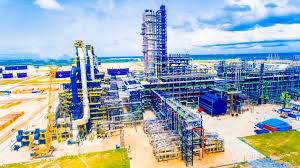
—- And a Celebration of the Disappearance of Fuel Queues in Nigeria
By Ray Echebiri and Alexander Ekemenah
It is a pair of lucky breaks: One year anniversary of Dangote Petroleum Refinery and Petrochemicals FZE, and one year of no-fuel-queues in Nigeria. Rolling out the drums and beating them to breaking point should be permitted as an indulgence in celebration of this reverse of a double whammy. Nigerians have not had it this good in decades.
For decades, Nigerians literally went through hell due to perennial fuel scarcity which had become an intricate part of their socio-economic life. Long queues of vehicles at filling stations and jerry can-carrying fuel hawkers had become ubiquitous in the country. As one episode of fuel scarcity was ending, another would start. Every Yuletide was greeted with fuel scarcity that turned the celebrations associated with the season into hardship, as movement of people and goods during the season became dreadful.
Christmas and New Year Without Fuel Scarcity
For the first time in years, the Yuletide of 2024 was celebrated without tears and hardship, especially for Nigerians that travelled to different places to celebrate the joyous season with their loved ones. And it is all thanks to Dangote Petroleum Refinery and Petrochemicals.
Dangote Refinery Churns Out Petroleum Products
About this time last year, Dangote Petroleum Refinery and Petrochemicals started pumping out petroleum products, especially Premium Motor Spirit (PMS), otherwise known as petrol. The refinery had actually started churning out diesel and aviation fuel earlier. It was both revolutionary and cataclysmic development not only in the history of oil and gas industry in Nigeria, nay Africa, but also in the entire gamut of the political economy of the country and the African continent.
This game-changing development was made possible by Alhaji Aliko Dangote, the richest black man in the whole wide world. And it is a demonstration of sheer will power by an individual who believes that Nigerians deserve better quality of life, and what is possible for the private sector to achieve when the policy and operating environment is conducive.
Good Public Policy Laid the Foundation
Indeed, the policy thrust of the Federal Government that granted Dangote the licence and free hand to start and complete this monumental 21st Century Industrial Wonder of the World under the Goodluck Jonathan administration (2010-2015) must be saluted for its courageous and stupendous contribution to the growth and development of the Nigerian political economy and that of Africa as a whole.
A Toast of the World
Dangote Refinery has become a toast of the world. How was it possible that such a thing could happen where others, for the fear of the unknown, could not even dare to contemplate such a mind-blowing private sector initiative? What sort of dream and encouragement did Dangote have that propelled him to embark on this industrial journey?
Dangote Refinery was completed within 10 years. Actually, the refinery was initiated in 2013, with the excavation and infrastructure preparation starting in 2016, and major construction work starting in 2017. The plant was formally inaugurated on May 22, 2023, by Late President Muhammadu Buhari. Due to technical delays, the refinery did not start production until 2024, starting with diesel and aviation fuel in January, 2024, and PMS in September.
Starting production and selling products to the market did not come easy. It was met with stiff opposition from all angles: regulatory, institutional, and political maneuvering of determining justiciable pricing and adjudication, including international pressure. But one after the other, the refinery was able to overcome all the obstacles.
The End of Fuel Subsidy in Nigeria
On May 29, 2023, a new administration took over government. With a policy pronouncement, the age-long oil subsidy was finally removed and ended the same day. This, however, created monumental challenges for balancing demand and supply of petroleum products in the country. There was mortar-and-pestle throwing and jostling between Dangote Refinery, government, the oil and gas industry regulators and operators in the country.
Dangote Refinery, Africa’s biggest refinery with 650,000 barrel-per-day (bpd) capacity, was waiting in the wings to bridge this almost intractable demand and supply matrix to begin processing oil products for the local market and across the West African region. The task was not an easy one. All manner of obstacles were piled up in front of the refinery in order to frustrate and prevent it from coming on stream.
Propagandists at Work
Meanwhile, there was enormous propaganda to the effect that the refinery would become almost irrelevant when and if the four existing Federal Government-owned refineries in Port Harcourt, Warri and Kaduna become once again operational. Billions of naira has been spent in the last decades to overhaul these dormant refineries through turn around maintenance – all to no avail, at the end of the day.
There was even the attempt to scuttle the entire project by claiming that the petroleum products produced by the refinery were not good enough in terms of quality. These were examples of plans by some forces to stop the refinery from ever seeing the light of day.
The whole world held its breath, waiting to see what would happen to the refinery, given the mountainous institutional bottlenecks it had to overcome.
Finally, the very stone that was threatened to be cast out would become the corner piece that would hold together the entire superstructure of fuel consumption in the country.
Dangote Refinery Transforms Nigeria’s Fuel Supply Landscape
One year after this epochal development, the Dangote Refinery has begun to transform Nigeria’s fuel supply landscape by producing and exporting diesel, PMS and aviation fuel, marking the country’s return to being a net exporter of refined petroleum products.
After more than 40 years of tragically becoming import-dependent fuel products’ consumers, Dangote Refinery has taken Nigeria to the global chessboard as a major exporter of petroleum products. This calls for celebration, especially where the Nigerian State has failed calamitously to engineer or re-engineer a model of regular supply of petroleum products for the country.
Dangote Refinery is gradually increasing its output, transitioning the country from importation of petroleum products to supplier to the local market and finally to the export market. At inception in September 2024, the refinery was expected to supply 25 million litres of petrol daily, and increase to 30 million litres daily from October 2024. This could not be achieved due to technical problems. This is because the entire refinery had yet to reach 100 per cent completion. However, there were critical milestones along the pathway to production by Dangote Refinery.
Production and Export
The refinery started producing diesel and aviation fuel in January, and PMS in September, 2024, respectively. Producing enough petroleum products for local consumption was a critical milestone achieved by Dangote Refinery. This broke the chain that tied Nigeria to the apron of foreign refineries.
The refinery also started exporting its products shortly after it commenced production. This is another critical milestone and jinx broken by the refinery. For the first time in decades, the country became self-sufficient in petroleum products and net exporter of the products. Apart from helping to stop the foreign exchange hemorrhage that the importation of petroleum products prompted, the country is now earning foreign exchange from the company’s export of its products.
Another critical milestone achieved is the local supply of crude, rather than importation and payment for this crude in local currency, rather than foreign currency. However, this aspect is not yet a smooth ride to completion and sustainable local supply of petroleum products. But product distribution has gone not only national, but also regional, across West Africa.
Product distribution in itself is a herculean task, given the nation’s current transport infrastructure status. The strategic programme around product distribution is part of Dangote Refinery’s broader commitment to eliminating logistics costs, enhancing energy efficiency, promoting sustainability and supporting the nation’s economic development.
Key sectors such as manufacturing, telecommunications and others will also gain from this transformative initiative, as reduced fuel costs will contribute to lower production costs, reduced inflation, and foster economic growth. A lot of benefits reinforce each other. Players in these key sectors and others can purchase petroleum products directly from the Dangote Refinery.
The Mission of Dangote Refinery
The management of the refinery said: “Dangote Refinery is dedicated to ensuring that no place is left behind. Our goal is to provide equitable access to affordable fuel for all Nigerians, regardless of location, making energy more accessible and sustainable for everyone, wherever they may be. It is expected to revitalise previously inactive petrol stations, thereby driving job creation, stimulating small and medium-sized enterprises (SMEs), increasing government revenue, improving fuel access in rural and underserved communities, and strengthening investor confidence in Nigeria’s downstream petroleum sector.”
With Dangote Refinery, the acrimonious debate over fuel subsidy payment, a very criminal enterprise by its very nature, is slowly disappearing from the domain of public debate. The concern now is how the fuel pump price per litre can further come down.
Gone are long queues at filling stations across the length and breadth of the country. Gone are violent quarrels at filling stations. Gone are protests over many an issue in the downstream sector of the oil and gas industry.
More importantly, price has also moderated to a level where there were no more outcries in accordance with the Naira-Dollar exchange disparities.
Nobody can tell what would have happened in the last one year if Dangote Refinery had been frustrated from coming on stream to produce petroleum products for the nation. But what has become the toast in strategic quarters, locally and internationally, is that the refinery has come to help stabilise fuel supply amid global price volatility. The refinery marks a major revolution in the midstream and downstream sectors, and also stands as a key example of what private sector initiative can achieve if given the right business operating environment to operate.
The Dangote Refinery came as an ice-breaker in an industry that has become the biggest scam in Africa, stymieing development and preventing the rippling effects of an oil and gas industry from contributing to the building of a prosperous nation-state as exemplified by other oil producing countries in the Middle East and elsewhere.
But this progress has come with its own peculiar challenges. To bridge gaps left by inadequate local supply over the decades and the perennial crisis of fuel importation occasioned by the comatose four refineries owned and managed by the Federal Government, Dangote Refinery initially had to rely heavily on imported crude at the beginning, especially from the United States and other overseas suppliers, because the Nigerian National Petroleum Company Limited (NNPCL) was not favourably disposed to selling crude to the refinery in naira until forced to do so by the President Bola Tinubu.
Goodbye, Petroleum Products Importation?
For decades, Nigeria, Africa’s top oil producer, paradoxically relied on fuel imports to meet domestic needs. This practice has drained the nation’s foreign reserves and exposed it to recurring fuel scarcity and price volatility. The Dangote Refinery was conceived as a game-changing solution to this problem. With a nameplate capacity to process 650,000 bpd, the plant is not only expected to meet Nigeria’s fuel demand, but also supply excess volumes to neighbouring West African countries and beyond.
Dangote Refinery has brought to an end the painful years of petroleum products importation in Nigeria and the episodes of petroleum products scarcity in the country.

